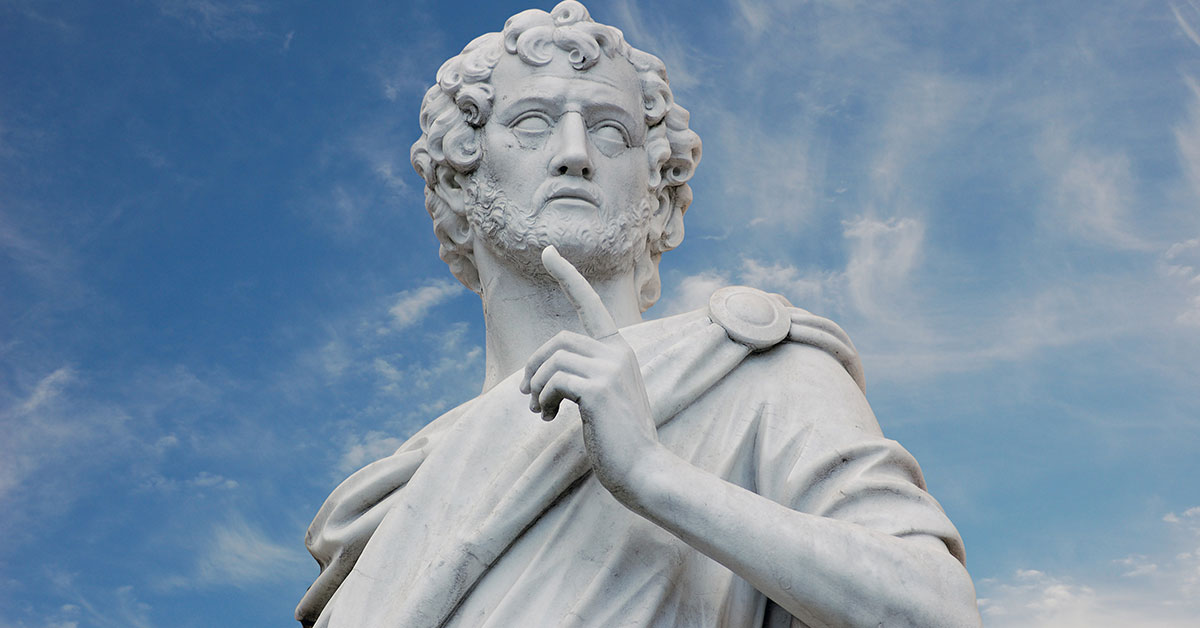
In episode 62 of the podcast I provide an extensive overview of the lives and works of some of the major astrologers of the Hellenistic astrological tradition, ranging from the 3rd century BCE to the 7th century CE.
During the course of the episode I give an overview of the rise and fall of astrology in the Greco-Roman world, and discuss some of the surviving sources that we have to study from that time period.
This episode is based on research I’ve been doing over the past month for a book I’m writing on Hellenistic astrology. I recently completed a chapter on the major astrologers of that tradition, so I thought it would be good to talk a bit about what I’ve been researching and writing.
In the episode I talk about each of the astrologers, and discuss things like what their approximate time frame was, what techniques were introduced or discussed in their works, what the philosophical foundations of their work was, how they influenced later astrologers, interesting anecdotes that help to humanize them, and more.
Obviously I had quite a bit to cover in this episode and I expected it to be kind of a long one, but it actually turned into a three and a half hour lecture on the topic, making this the longest episode of the podcast so far.
Timestamps
- 00:00:00 Introduction to the Lives and Works of Hellenistic Astrologers.
- 00:00:22 Introduction by Chris Brennan.
- 00:01:21 Definition and timeframe of Hellenistic (Greco-Roman) Astrology.
- 00:02:51 Writing process and historical context.
- 00:04:21 Discussion on the origins of Hellenistic Astrology.
- 00:04:57 Surviving sources of Hellenistic Astrology.
- 00:13:25 Oldest known Mesopotamian birth charts.
- 00:14:38 Alexander the Great and the founding of Alexandria.
- 00:15:42 The Ptolemaic Dynasty and the Library of Alexandria.
- 00:21:35 Berossus and the transmission of astrology to the West.
- 00:29:00 Foundational texts: Hermes Trismegistus.
- 00:33:36 Significations of the 12 houses according to Hermes.
- 00:38:01 Connection between Hermes’ text and Planetary Joys.
- 00:42:22 Foundational texts: Asclepius and the Octotopos.
- 00:49:28 Comparison between Hermes and Asclepius.
- 00:51:28 Nechepso and Petosiris: Widely cited foundational texts.
- 00:54:14 Transition to the Roman Empire.
- 00:56:37 Thrasyllus: Personal astrologer to Emperor Tiberius.
- 01:06:37 Balbillus: Successor and governor of Egypt.
- 01:15:03 Marcus Manilius and the Astronomica.
- 01:29:33 Antiochus of Athens: Introduction to astrology and definitions.
- 01:37:41 Versions of Antiochus’ text: Porphyry and Rhetorius.
- 01:45:22 Dorotheus of Sidon and his five-book poem on astrology.
- 01:59:48 Claudius Ptolemy: The polymath and his influence.
- 02:04:58 Ptolemy’s Tetrabiblos: A different approach to the tradition.
- 02:11:30 Ptolemy’s naturalistic and causal conceptualization.
- 02:28:10 Vettius Valens: The most important surviving source.
- 02:33:20 Dating Valens’ Anthology through chart examples.
- 02:36:02 Valens as a practicing astrologer and teacher.
- 02:42:29 Porphyry of Tyre: Neoplatonist philosopher and astrologer.
- 02:44:12 Porphyry house system and ruler of the nativity.
- 02:48:51 Antigonus of Nicaea and his book of famous charts.
- 02:52:31 Historical context: Legalization of Christianity.
- 02:55:12 Firmicus Maternus: Mathesis and conversion to Christianity.
- 03:09:45 Paulus Alexandrinus: Introduction to Astrology.
- 03:12:26 Anonymous of 379 on the fixed stars.
- 03:13:38 Hephaistio of Thebes: Synthesis of Ptolemy and Dorotheus.
- 03:16:58 Olympiadorus: Neoplatonist philosopher and commentator.
- 03:24:19 Rhetorius of Egypt: The last major compendium.
- 03:29:55 The end of Hellenistic Astrology and transition to the Medieval tradition.
- 03:35:15 Final thoughts and conclusion.
Timeline of Hellenistic Astrologers
Here is a rough timeline of the astrologers discussed in this episode:
- Oldest known Mesopotamian birth charts date to 410 BCE.
- Alexander the Great launches war against the Persian Empire in 334 BC.
- City of Alexandria is founded in Egypt by Alexander sometime shortly after 332 BCE.
- The Ptolemaic dynasty is founded in Egypt. Library of Alexandria.
- Berossus sets up a school for astrology on Kos in the early 3rd century BCE.
- Antikythera Mechanism thought to have been constructed around 150 BCE ±.
- The last Cuneiform and the first Greek birth charts appear around mid-1st century BCE.
- Early texts written circa 100 BCE.
- Hermes Trismegistus
- Asclepius
- Nechepso and Petosiris
- Rome annexes Egypt, Ptolemaic dynasty ends with the death of Cleopatra in 30 BCE.
- Thrasyllus (died in 36 CE). Serves Emperor Tiberius. Writes The Tablet.
- Manilius writes Astronomica around 14 CE ±.
- Balbillus. Mid-1st century. Thrasyllus’ son. Takes over his father’s position in the Roman imperial court. Served the emperors Claudius, Nero and Vespasian.
- Antiochus of Athens wrote an Introduction to astrology in 1st century CE.
- Dorotheus of Sidon wrote five book poem in late 1st century. Earliest surviving text on electional astrology.
- Manetho wrote his Apotelesmatika in the early 2nd century. He was born in May 80 CE.
- The Greek original of the Yavanajataka was written in Egypt in the early 2nd century.
- Claudius Ptolemy wrote the Tetrabiblos sometime around the mid-2nd century.
- Vettius Valens writes the Anthology in mid 2nd century. He was born February 8, 120 CE.
- Porphyry wrote Introduction to Ptolemy’s Tetrabiblos during the late 3rd century.
- Antigonus of Nicea – 2nd century. Wrote a book on famous nativities.
- The Emperor Constantine legalizes Christianity in the Roman Empire in 313.
- Firmicus Maternus wrote the Mathesis towards the middle of the 4th century.
- Paulus Alexandrinus wrote his Introduction and dedicated it to his son in the year 378.
- Anonymous of 379 wrote a work on the fixed stars in the year 379.
- Hephaistio of Thebes wrote his Apotelesmatika sometime in the early 5th century, based largely on Ptolemy and Dorotheus. He was born November 26, 380.
- In the mid-6th century astrology flourishes in the court of the Persian king Kusro Anushirwan (Forgot to talk about this in the podcast. Will discuss in later episode).
- Olympiodorus the Younger wrote a commentary on Paulus’s Introduction in the summer 564 CE.
- Rhetorius of Egypt wrote a large Compendium in the early 6th or 7th century (dating disputed). Last major work on Hellenistic astrology.
- Egypt is taken over by the Islamic Empire in 639. This essentially marks the end of the Hellenistic astrological tradition.
Resources for Further Research
- If you enjoy this episode and you would like to learn more about the history and techniques of ancient astrology see my online course on Hellenistic astrology.
- Demetra George is doing a full webinar on Thrasyllus’ life and work on February 16, 2016.
Transcript
A full transcript of this episode is available: Episode 62 transcript
Listen to This Episode
You can either play this episode of the podcast directly from the website or download it as an MP3 to your computer by using the buttons below:
Podcast: Play in new window | Download (Duration: 3:35:42 — 98.9MB)